Latest news

Marvellous Mendelssohn

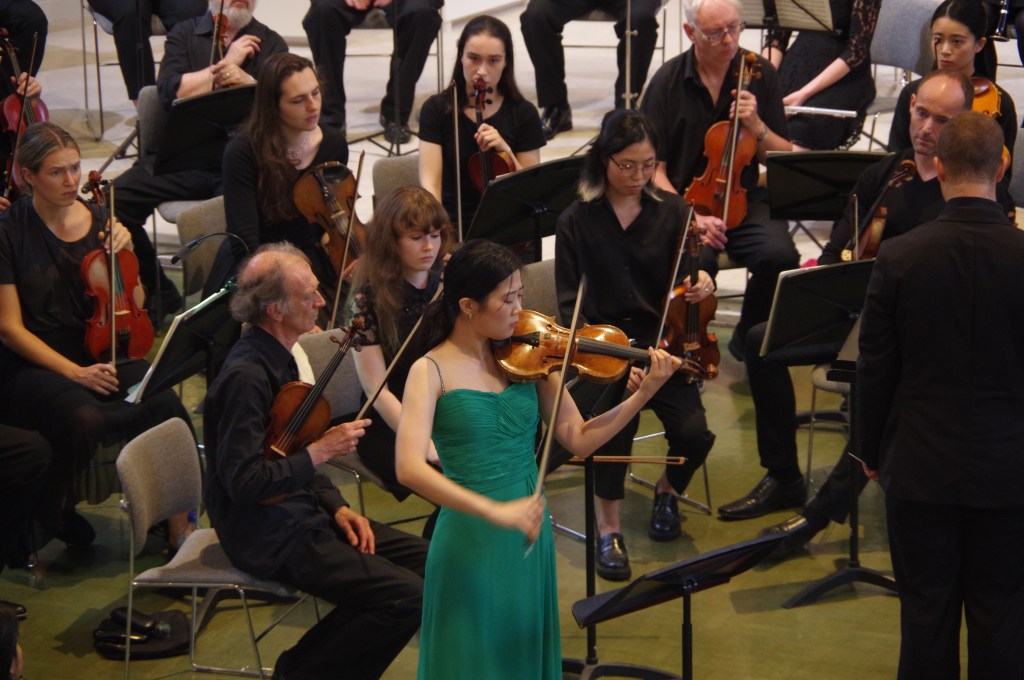
Our Mendelssohn and Sibelius summer concert was such a great evening! Our wonderful soloist Youngjune Lee gave a bravura performance of the Mendelssohn Violin Concerto which was thunderously applauded (and cheered) by our appreciative audience.
The evening opened with Louise Farrenc Overture 2, expertly conducted by Assistant Conductor Olivia Tait who also led the orchestra in the short excerpts of Sibelius 6 accompanied by expert – and amusing – commentary from conductor Christopher Stark. The evening concluded with a full performance of the symphony which was clearly greatly enjoyed by our lovely audience.

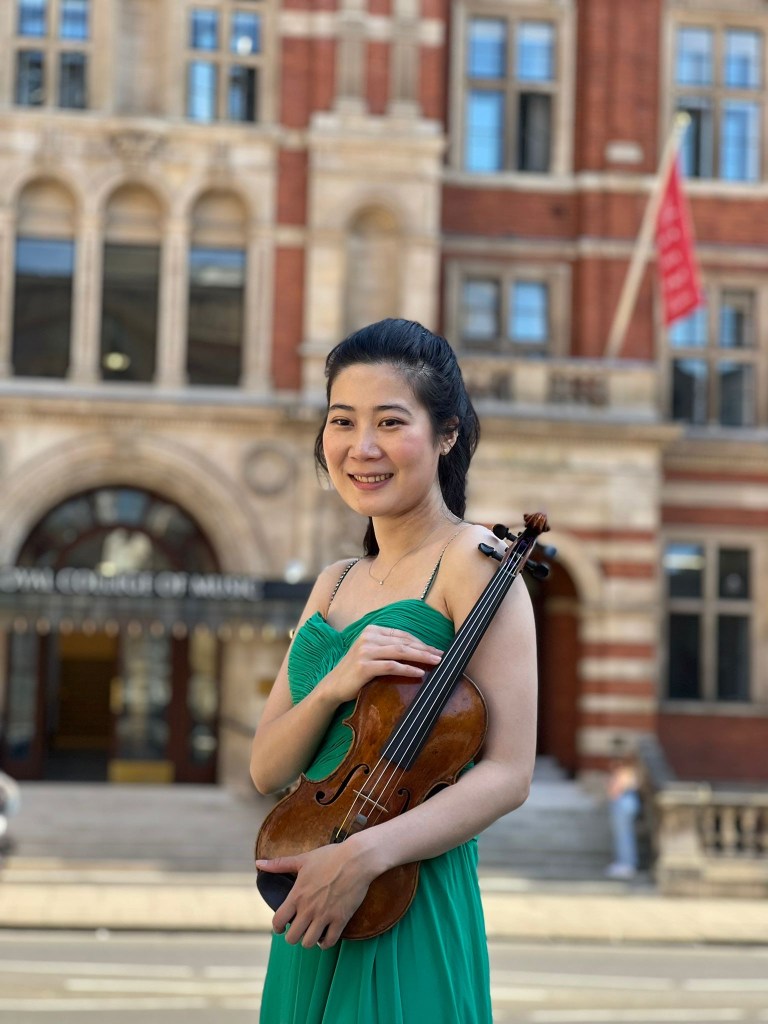
June Lee – our 2023 ERSO Soloist of the Year

June Lee is a South Korean violinist currently based in London. She is studying for her Artist Diploma at the Royal College of Music, where she is a Jacqueline Ward Award Holder and a student of Professor Itzhak Rashkovsky. She completed her Master of Performance degree from the same institution with Distinction.

June has performed as a soloist with various orchestras including the KBS Symphony Orchestra, Romania Bacau Philharmonic Orchestra, and the KNUA Symphony Orchestra, Joy of Strings, The Bridge Ensemble. She has also showcased her talent on international stages, performing the ‘Work’ as a violin soloist for the Kim Yong-geol Dance Theater at the Kennedy Centre in Washington D.C. She has been a member of Joy of Strings since 2007, participating in a recording titled “Slavic Sketches” published by Universal Music and performing with them in Europe, Belgium and Japan.

June has performed in various concerts, such as LSO St. Luke’s, KCC House Concert, St John’s Smith Square Crypt Classics, St Mary le Strand, and the Bloomsbury Festival. She has extensive experience as an orchestral player in London, having led the RCM Symphony Orchestra and also being selected for the London Symphony Orchestra string experience scheme in 21/22. She has also worked on a freelance basis with orchestras such as the London Philharmonic Orchestra, the Philharmonia, and the Royal Philharmonic Orchestra.

In 2023, June was selected for the soloist of the year by Ernest Read Symphony Orchestra.

Meet the Finalists – Adam Cubitt

Talented young cellist Adam impressed our audition panel with his elegant performance of Haydn’s Concerto in C. We caught up with him to find out more…

What is your main occupation at the moment?

I am an undergraduate student at the Royal Academy of Music under Professor Josephine Knight.

What made you choose to play your instrument and how old were you when you started?

When I was about four years old, I started to notice the cello while listening to BBC Radio 3, and began asking my mother for cello lessons; I started playing the cello when I was 4 ½ years old.

What made you choose the concerto that your will be playing?

Haydn’s Cello Concerto in C is one of our great works. I love it for its expressive power; it is lyrical, tender, and passionate.

What do you feel you would gain from the experience of winning this competition and playing your concerto with ERSO and Chris Stark?

To win this competition and play Haydn’s Cello Concerto in C with ERSO and Chris Stark would be a great honour. It would be my first time playing it with an orchestra, so it would be wonderful to perform this music as it was meant to be played!

Meet the Finalists – June Lee

Our audition panel had a great time listening to June performing the Mendelssohn Violin Concerto on March 5th!

June is studying at the Royal College of Music. She began playing the violin at age 5, following the lead of one of her friends.

We asked he what winning would mean and June told us: “If I was to be the soloist of the year, it would be my first concert with an orchestra in UK and the last concert I play before I graduate. I am pretty sure it would be a wonderful concert to be playing this special piece with ERSO.”

Meet the Finalists – Shuang Wu

Sunday March 5 saw the annual auditions for the 2023 ERSO Soloist of the Year competition. We saw so many amazing and talented players and picking only 4 to go ahead to our orchestral Final was very tough!

We’re excited to introduce Shuang who impressed us with her performance of the Sibelius Violin Concerto.

What is your main occupation at the moment?

Currently I am under the tutelage of Lutsia Ibragimova on the violin. I am also a third year Politics, Philosophy and Law (LLB) student at King’s College London. 

What made you choose to play your instrument and how old were you when you started?

My parents love music and, growing up, there was always music playing in the house. It was at the age of three that my parents asked if I wanted to learn an instrument, and I pointed to the violin in an orchestral concert that was playing on the TV.  I have never looked back ever since. 

What made you choose the concerto that your will be playing?

The Sibelius Violin Concerto has always been one of my favourite violin concertos that I’ve never had the chance to pick up, so when, if not now. There is something so captivating about the paradox between the wintery coldness and warmth in the concerto, and I particularly love the hauntingly beautiful yet vulnerable opening of the piece. 

What do you feel you would gain from the experience of winning this competition and playing your concerto with ERSO and Chris Stark?

Every opportunity to work with an orchestra is truly valuable for all aspiring musicians. I would be so honoured to have the inspiring experience of creating music and exchanging musical ideas with the wonderful Chris Stark and the amazing musicians at ERSO. It will definitely be a huge step for my musical growth.

Cécile Chaminade – a pioneering female composer

Cécile Chaminade (1857–1944) was a French composer and pianist known chiefly for her piano music. She was a contemporary of Mel Bonis who featured in one of our #ERSOOnline “forgotten voices” films. Like Bonis, Chaminade faced many obstacles as a female composer.

Chaminade was born to musical parents and showed musical promise at a young age, performing her own composition for Bizet at the age of 8. Her parents refused to send her to the Paris Conservatoire as they felt this to be inappropriate for a girl of her social class, but did allow her to take private lessons with some of the professors. She gave her first public recital as a pianist at age 18 and toured France, the UK and America, playing her own music. In 1913 she was awarded the Légion d’Honneur, a first for a female composer. The composer and teacher Ambroise Thomas said, “This is not a woman who composes, but a composer who is a woman.”

In the latter half of her life, Chaminade’s work became less well regarded. While once praised for writing charming, feminine music, musical taste around the turn of the century led to her music being seen as too feminine and frothy whilst later pieces like her Concertstück were criticized for being too masculine.

As well as piano and vocal music, Chaminade also wrote a comic opera, a ballet, and a choral symphony. One of her most performed pieces today is her flute concertino.

Josh joins ERSO!

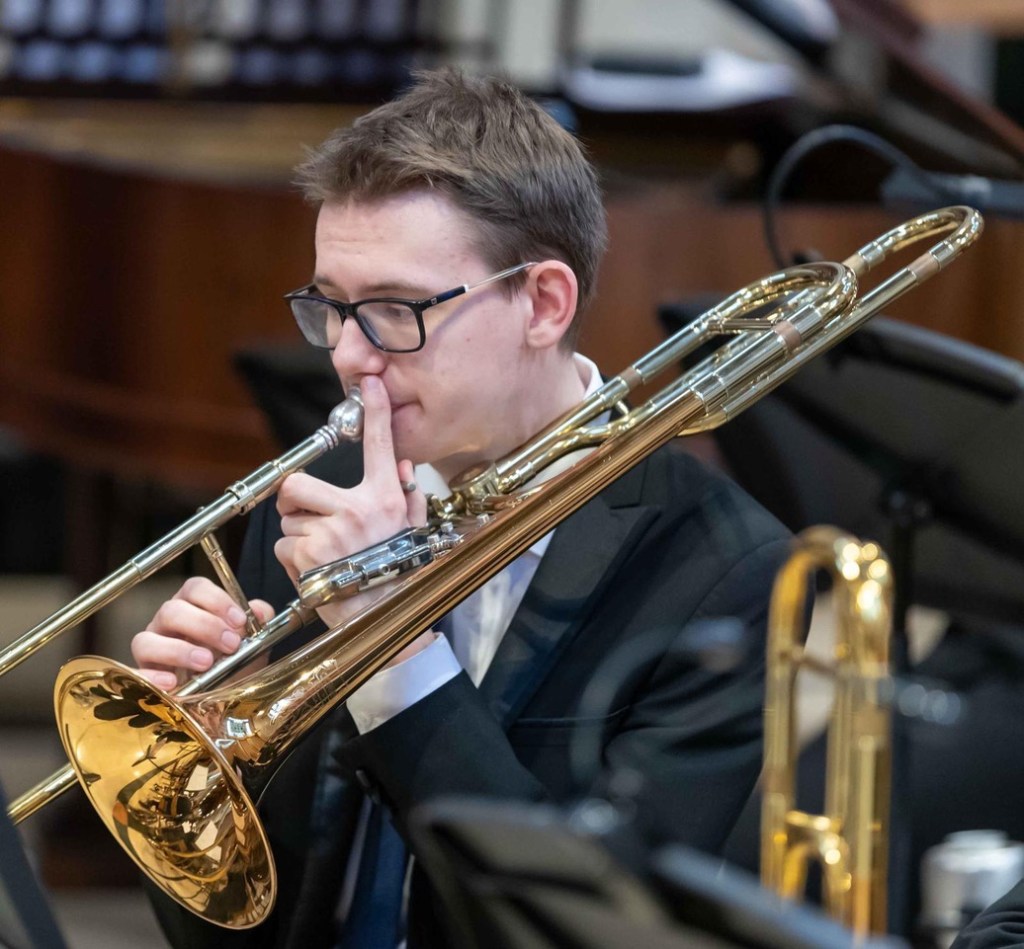
After our lengthy audition process where we saw some really excellent brass players, we are so excited to be able to welcome our new Brass Leader Josh Brierley. He is a hugely talented young trombonist studying at Guildhall and will be working with the ERSO committee and Principal Conductor Chris Stark to make our fabulous brass section even stronger.

Check him out at: Joshua Brierley – Brass Leader

Juri joins ERSO!

Our November 27th workshop with Camden children will be the very last concert for Principal 2nd Violin Lucy Haggerwood-Bullen. We’ll be so sad to say goodbye!

But we are also extremely excited to welcome our new Principal 2nd Violin Juri Uchishiba!

Juri is a London based violinist and graduate of the Guildhall School of Music and Drama. She had her first orchestral experience at the age of 10, when she received the Leverhulme Trust scholarship from the National Children’s Orchestra and has enjoyed orchestral playing ever since. After graduating in 2017, she spent one year as a graduate assistant for the Guildhall Young Artists program where she engaged in regular CPD and has since moved on to teaching young students in schools around London. In addition to this, she also works as a session violinist for varying genres of music with her recent credits including ‘Pathways’ from Decca Records and Mabel’s ‘About Last Night’ from Polydor Records.

Back where we belong!

Being back at the newly transformed space at St John’s Waterloo was greatly appreciated by our players and our wonderfully warm audience. The evening opened with Assistant Conductor Olivia Tait expertly directing the orchestra in Grant Still’s Threnody in Memory of Jean Sibelius. Our soloist Ellen Baumring-Gledhill gave an amazing performance of the Elgar Cello Concerto and the evening concluded with Schubert’s “Great” C major symphony, prefaced by insightful commentary from conductor Chris Stark. All in all, a great evening!

If at first…..

The two main pieces in ERSO’s Welcome Back to Waterloo have something in common – both had a poor initial reception, even though they are now known as masterpieces.

Schubert completed his 9th Symphony in 1826, and as he was not able to pay for a performance, he sent it to Vienna’s Gesellschaft der Musikfreunde (Society of Friends of Music) – an amateur orchestra at the conservatory – who played it through but then put it aside as too long and difficult. It might have remained un-played had Schumann not discovered the score after Schubert’s death.

The first performance of Elgar’s Cello Concerto in 1919, conducted by Elgar, was also not a success. The conductor of the rest of the programme over-ran his part of the rehearsal schedule, and so Elgar and the performers did not have enough rehearsal time and the piece was poorly received. The work did not achieve wide popularity until the 1960s, when Jacqueline du Pre’s recording caught the public imagination.

Join us to hear these two amazing pieces on 30 October at St John’s Waterloo: Tickets and future concerts